








In 2025, a team of 45 people at Kodezen started the year with one clear goal:
to turn a small set of products into a complete WordPress ecosystem.
At the beginning of the year, Kodezen had two established products in active growth:
Academy LMS and aBlocks.
What followed was not a branding exercise.
It was an execution challenge.
An ecosystem means maintaining multiple product categories at once—learning, website building, eCommerce, community, content systems, and internal workflows—while keeping everything stable for real businesses. It means shipping continuously, expanding scope, and earning trust with every release.
Throughout 2025, the team shipped hundreds of releases across products, introduced hundreds of new features, fixed thousands of issues, and improved workflows that users already depended on in production. In parallel, we produced hundreds of documentation updates, tutorials, videos, and design improvements so users could adopt changes with confidence—not confusion.
This year was also about expansion.
In 2025, Kodezen released five new products, each built to solve a specific system-level gap inside WordPress:
- StoreEngine (eCommerce, payments, & License management Solution)
- ZenCommunity (real-time community, support, and live chat)
- Easy Content Manager (structured content & data system)
- GemBoards (task and workflow management)
- QuizPress (quiz, assessment, and certification engine)
Alongside Academy LMS and aBlocks, this brought the total ecosystem to seven actively developed products—designed to work together, not compete for space.
Every update affected real businesses.
Every release carried responsibility.
There were no shortcuts—only steady execution, feedback, and system-level thinking.
By the end of the year, the result was clear.
Kodezen is no longer a collection of plugins.
Kodezen is now a WordPress ecosystem.
The Work Behind the Ecosystem — In Numbers
In 2025, Kodezen did not grow by adding noise.
We grew by shipping, fixing, improving, and supporting real products used in real businesses.
Behind the idea of a “WordPress ecosystem” was a year of sustained execution—across releases, features, fixes, content, and people.
Here is what that work looks like in numbers.
Ecosystem-Level Impact
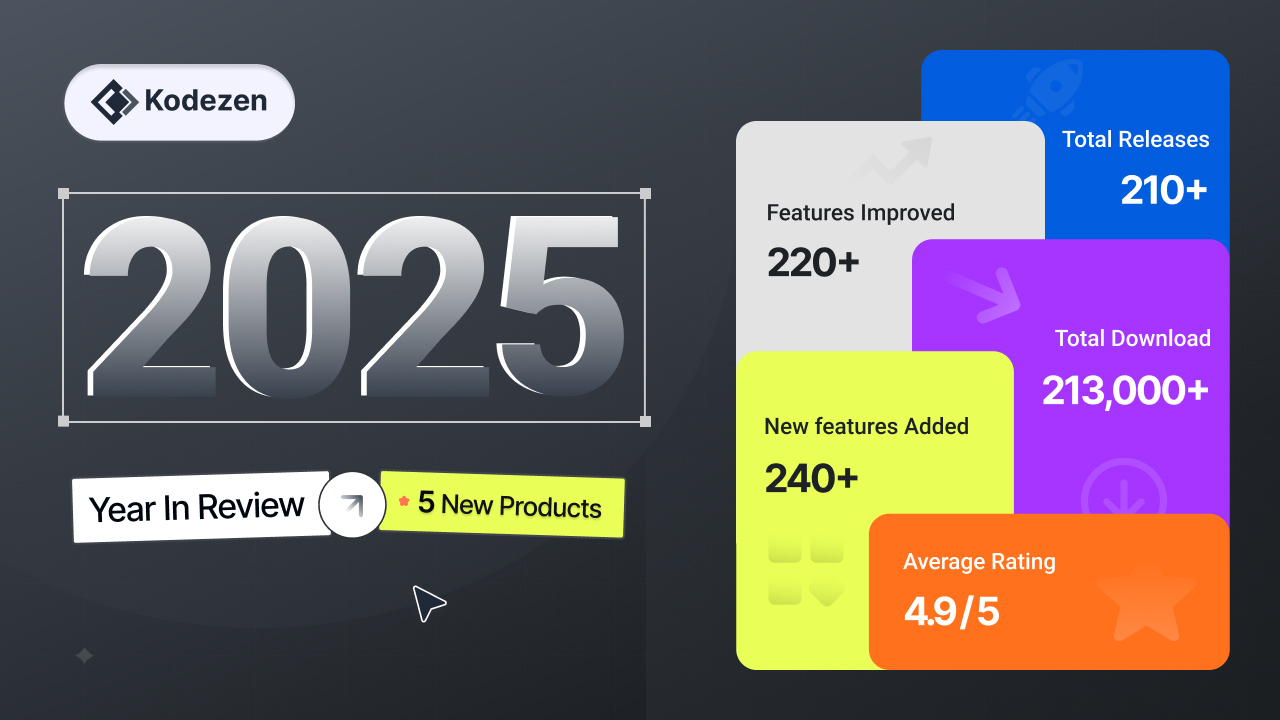
- Total downloads across products: 213,000+
- Average product rating: ⭐ 4.9 / 5
- Total releases shipped: 210+
- New features added: 240+
- Bug fixes delivered: 600+
- Existing features improved: 220+
These updates were not experimental.
They were deployed on live sites running learning platforms, stores, communities, and others.
Product Execution Breakdown
Academy LMS — Top Rated LMS Plugin in WordPress
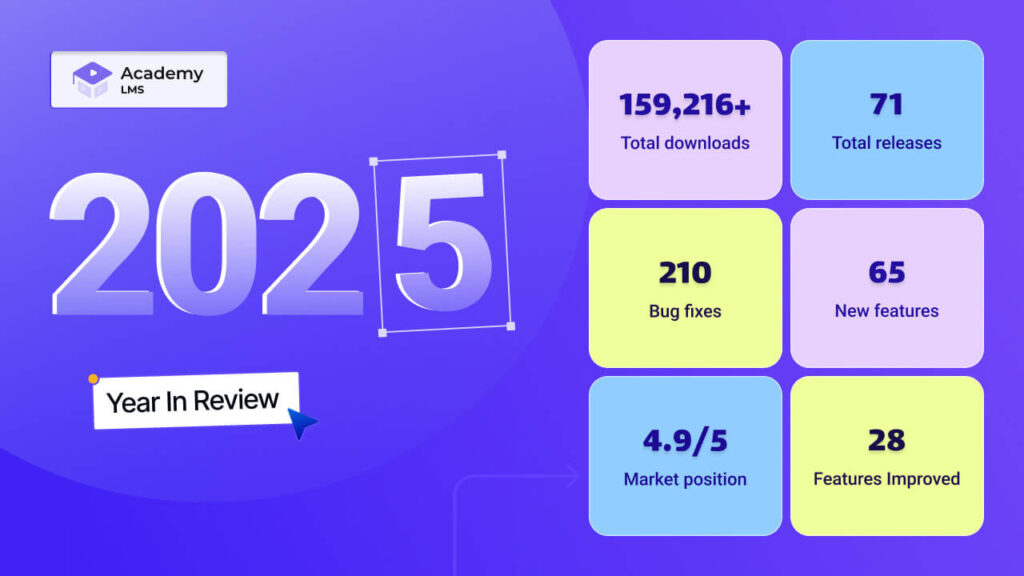
- All-time downloads: 159,216+
- Market position: ⭐ Top Rated LMS on WordPress.org
- Total releases: 71 (Free 38, Pro 33)
- New features added: 65
- Bug fixes: 210
- Existing features improved: 28
Academy LMS evolved into a business-ready learning platform with AI-powered course creation, native payments, memberships, subscriptions, group training, advanced analytics, device restriction, content drip, and deep StoreEngine integration.
It was built to support every major course business model—not demos, but real operations.
aBlocks — Complete Website System Builder
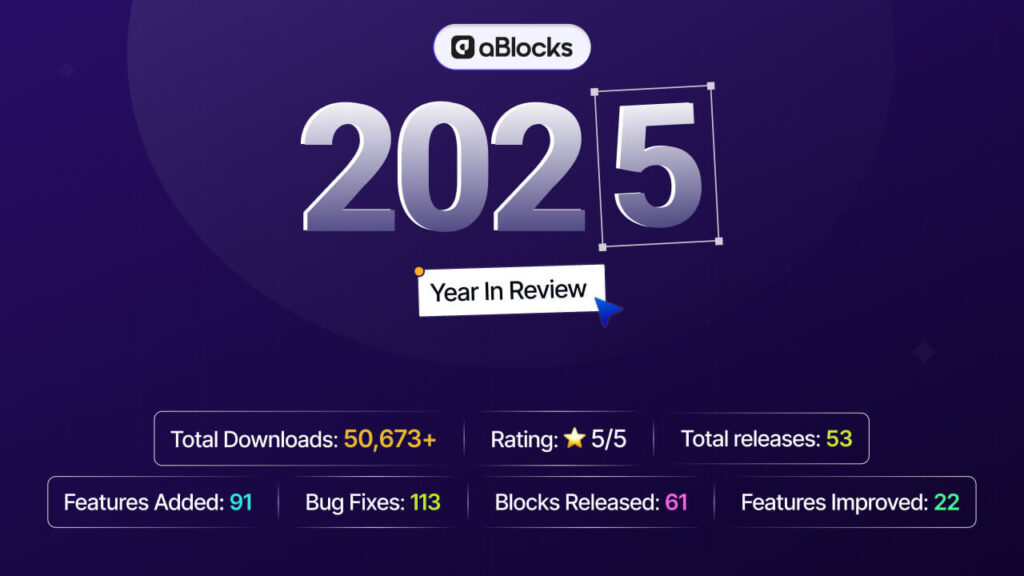
- All-time downloads: 50,673+
- Average rating: ⭐ 5 / 5
- Total releases: 53 (Free 31, Pro 22)
- New features added: 91
- New blocks released: 61
- Bug fixes: 113
- Existing features improved: 22
aBlocks moved far beyond page building.
It became a full website system—covering theme building, dashboards, dynamic content, forms, animations, LMS blocks, and eCommerce layouts—inside one plugin.
StoreEngine — Complete eCommerce Engine
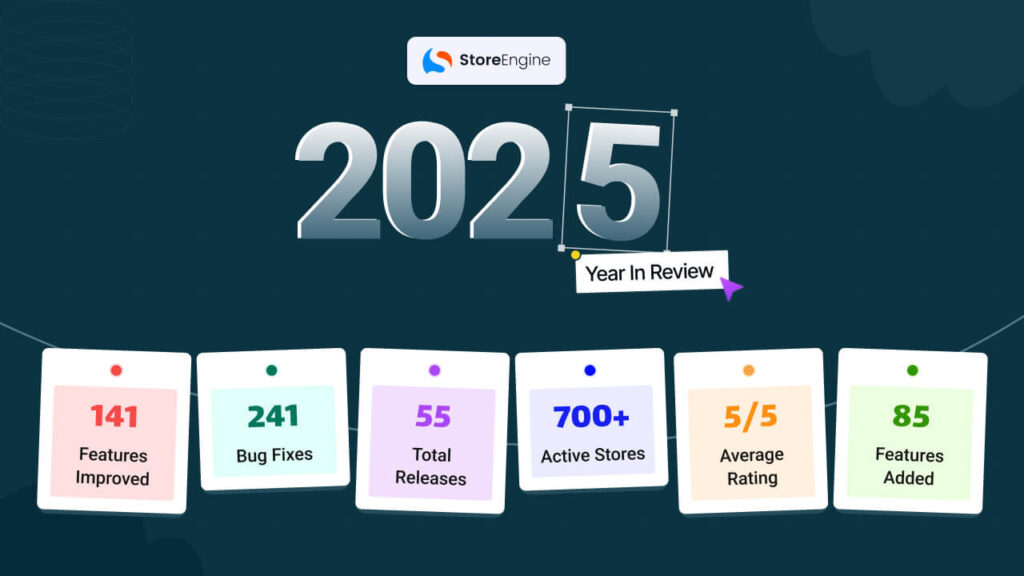
- Active stores: 700+
- Average rating: ⭐ 5 / 5
- Total releases: 55 (Free 40, Pro 15)
- New features added: 85
- Bug fixes: 241
- Existing features improved: 141
Launched in 2025, StoreEngine matured fast.
Payments, subscriptions, digital delivery, licensing, checkout control, growth tools, analytics, shipping, and LMS commerce were brought under one roof—without forcing users to buy extra plugins.
ZenCommunity — Real-Time Community, Support & Live Chat
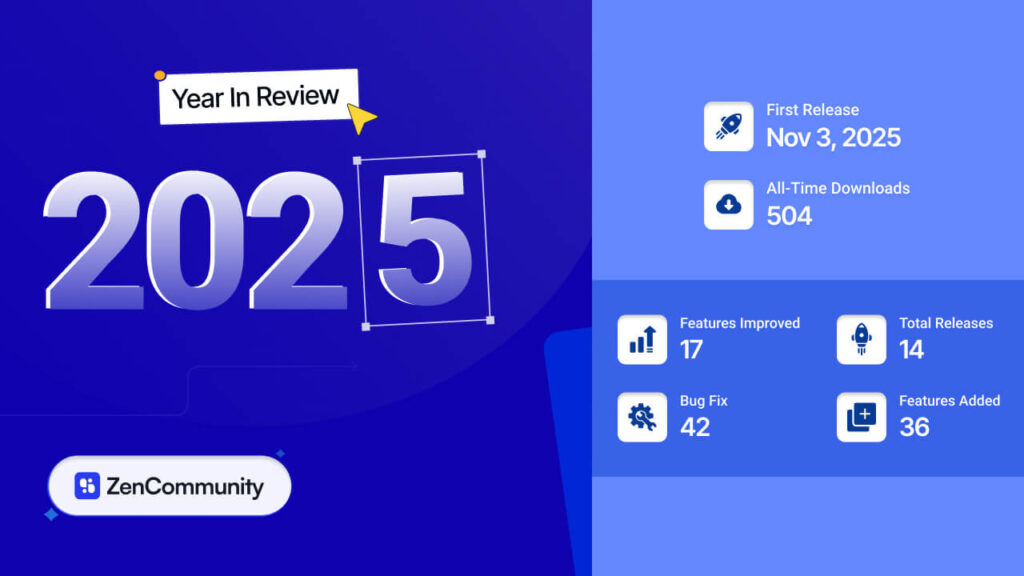
- First release: Nov 3, 2025
- All-time downloads: 504
- Total releases: 14
- New features added: 36
- Bug fixes: 42
- Existing features improved: 17
ZenCommunity combined real-time community, support tickets, and live chat into one system.
Today, Kodezen runs its own customer community and support fully on ZenCommunity.
Easy Content Manager (ECM) — Modern Content Infrastructure
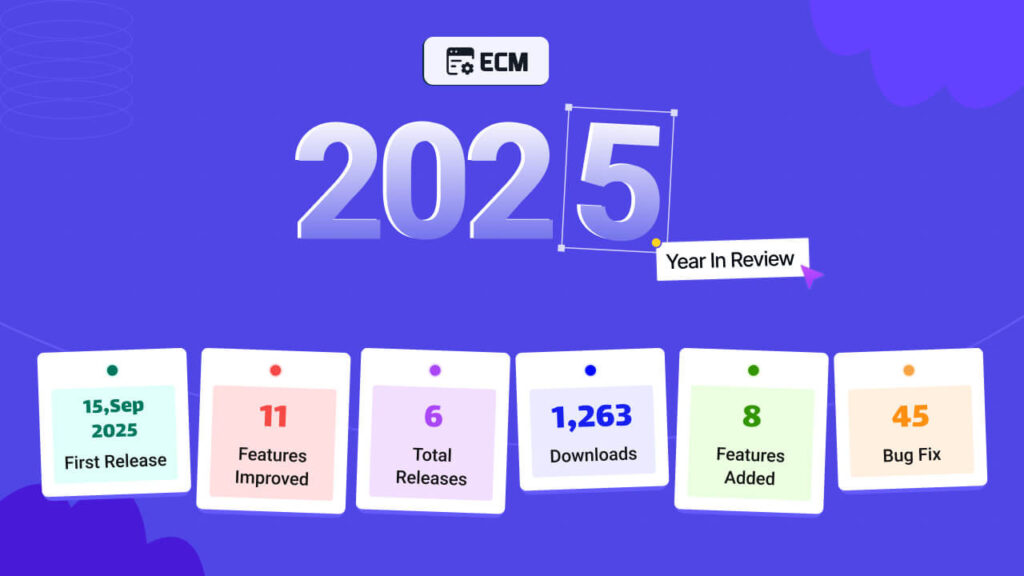
- First release: Sep 15, 2025
- All-time downloads: 1,263
- Total releases: 6
- New features added: 8
- Bug fixes: 45
- Existing features improved: 11
ECM expanded WordPress content control beyond classic custom fields—bringing modern content management, taxonomies, dashboards, and engagement add-ons into one system.
QuizPress & GemBoards — Emerging Platforms
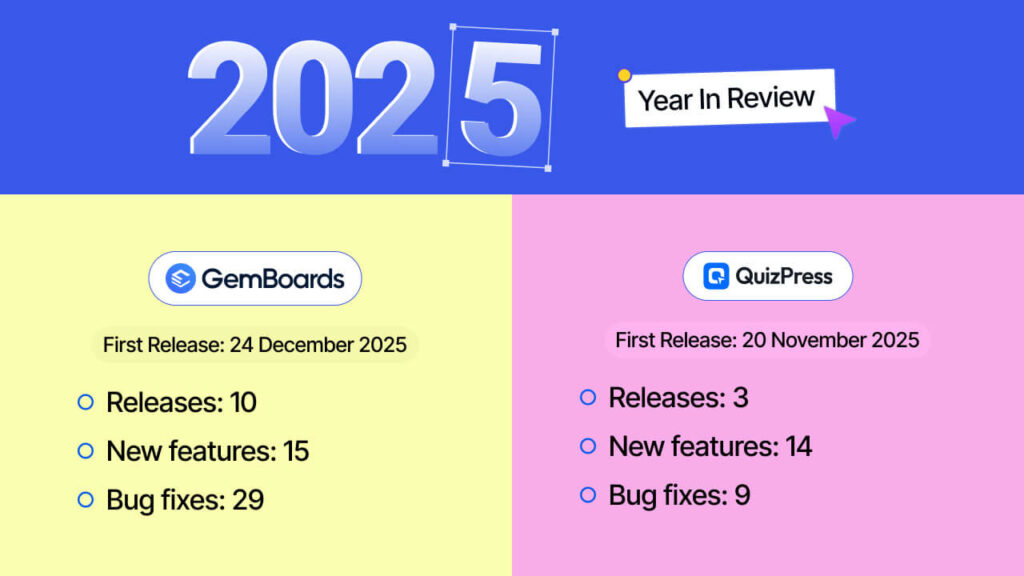
QuizPress
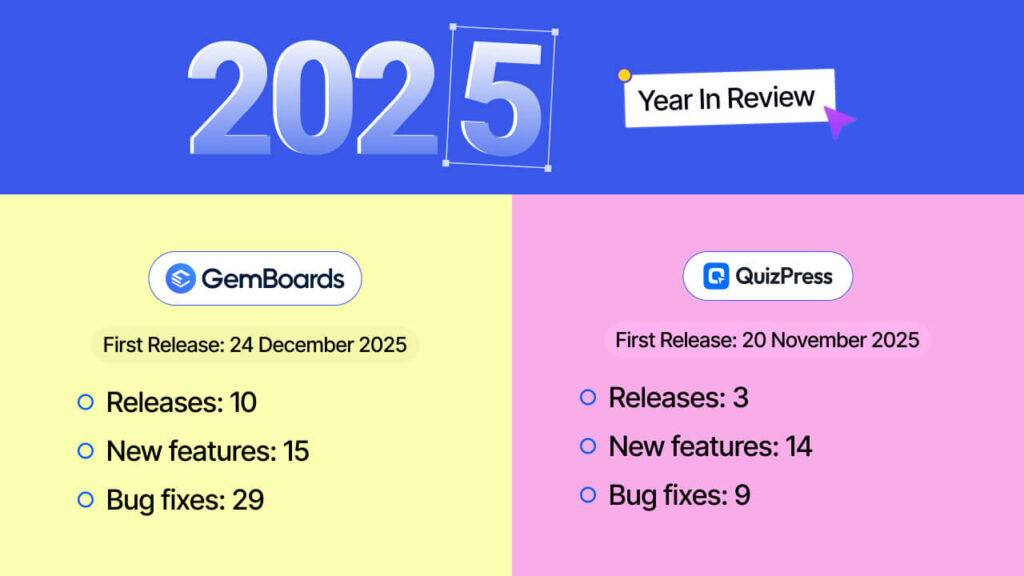
- First Release: 20 November 2025
- Releases: 3
- New features: 14
- Bug fixes: 9
GemBoards
- First Release: 24 December 2025
- Releases: 10
- New features: 15
- Bug fixes: 29
Both products entered beta with focused goals—assessment for learning and workflow management—while fitting naturally into the larger ecosystem.
Support, Content & Product Education
The shipping code was only part of the work.
In 2025, Kodezen also delivered:
- Support Tickets Handled: 12195+
- 250+ documentation articles
- 100+ tutorial videos
- 100+ short-form reels
- Continuous UI, UX, and website improvements across products
Every feature shipped came with explanation, onboarding, and long-term support.
The Team Behind the Numbers
Execution at this scale required people—not shortcuts.
In 2025:
- Hundreds of candidates applied to join Kodezen
- 15+ new team members joined across engineering, product, support, and content
- 2 new employee benefit programs introduced
- Annual team tour and recognition programs held
- Top performers rewarded for impact, not output
The focus stayed clear:
build carefully, grow responsibly, and protect product quality.
What Kodezen Achieved at a Glance Together in 2025
What we focused on building in 2025 was depth, connection, and clarity.
What we achieved was a position.
By the end of the year, our most established products had earned clear roles in the WordPress market. Each one stood strong on its own, while also fitting into a broader ecosystem shaped by real usage, feedback, and long-term thinking.
Established Products and Their Market Position
Academy LMS – The Top-Rated LMS Plugin in WordPress
aBlocks – The Most Free Block Plugin and Complete System Builder
StoreEngine – Complete eCommerce Plugin with Built-in Growth Features
ZenCommunity – The only real-time community plugin in WordPress with support and live chat
Easy Content Manager (ECM) – Structured content management for complex WordPress sites
These products represent the foundation of Kodezen today. They reflect the focus we set at the start of 2025: fewer tools, clearer roles, and systems that work better together.
Supporting Products That Complete the Ecosystem
Alongside our core products, we continued to strengthen tools built for specific workflows—tools that align closely with how teams manage content, collaboration, and engagement inside WordPress.
GemBoards – Visual task and workflow management inside WordPress
QuizPress – Advanced quiz, assessment, and certification for learning and engagement
These products may serve narrower use cases, but they play an important role in supporting the broader ecosystem we are building—especially for teams, educators, and growing businesses.
Kodezen at WordCamp: Connecting With the Community in 2025
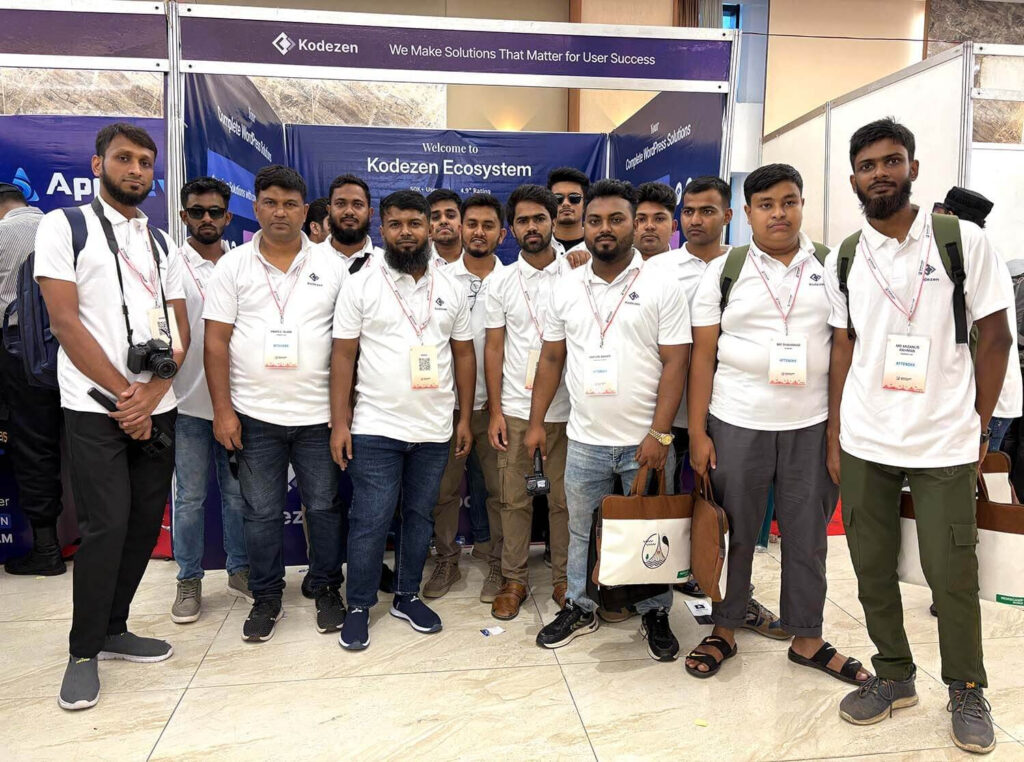
In 2025, we joined multiple WordCamps—both locally and worldwide.
These events were not about promotion for us. They were about listening.
The most meaningful moment came at WordCamp Dhaka, where Kodezen participated as a sponsor. We had a booth. People stopped by. Conversations started naturally.
What followed stayed with us.
Users shared how our products were helping them in real projects. Course creators talked about smoother workflows. Store owners spoke about reduced complexity. Builders showed live sites they had built with our tools. These were not demos or testimonials we asked for. They were real stories, shared with honesty.
Hearing those experiences in person was powerful.
It reminded us that what we build reaches far beyond code.
WordCamp also gave us clarity. The questions people asked, the feedback they shared, and the problems they described helped us see our products through fresh eyes. Many of the ideas that shaped our roadmap came directly from those conversations.
After WordCamp, we brought that energy back to the team.
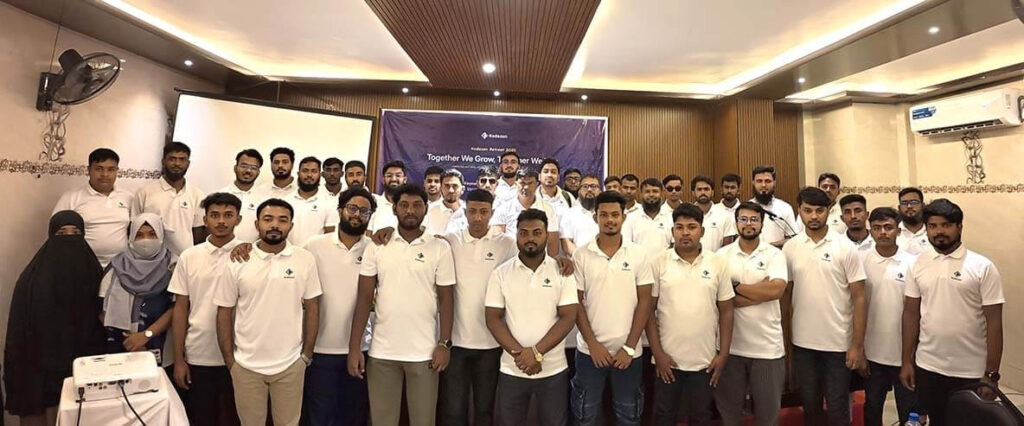
We organized an internal session with the full Kodezen team. We reviewed the year—what challenged us, what we achieved, and what needed improvement. We aligned on direction for the year ahead and recognized team members who made a real impact through their work.
That moment mattered.
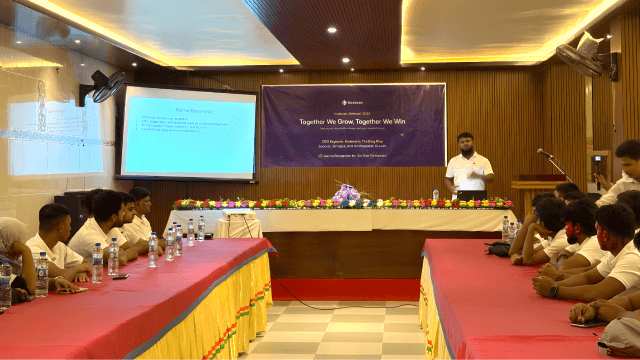
It connected community feedback with internal purpose. It reminded us why we build the way we do—and who we build for.
WordCamp 2025 was not just an event for us.
It was a checkpoint. A validation. And a push forward.
Academy LMS: From Strong Potential to Market Leadership
By the end of 2024, Academy LMS was already performing well.
But inside the team, there was a stronger feeling—this product could go much further.
We wanted Academy LMS to reach a leadership position in the WordPress LMS industry. Not by noise, but by depth. So at the beginning of 2025, we made a focused decision: understand the market fully, then outbuild it with care.
We analyzed every major LMS competitor. We mapped essential features, common gaps, and real user pain points. But we did not stop at matching what others had. We planned to go beyond—both in capability and experience.
One of our first priorities was speed and creation flow.
We introduced AI-powered course creation to help instructors build faster without sacrificing structure or quality. From there, we shifted toward more advanced and practical needs—attendance tracking, smarter certificates, lesson comments, note-taking, quiz improvements, flexible content drip rules, and deeper learner control.
Execution mattered just as much as ideas.
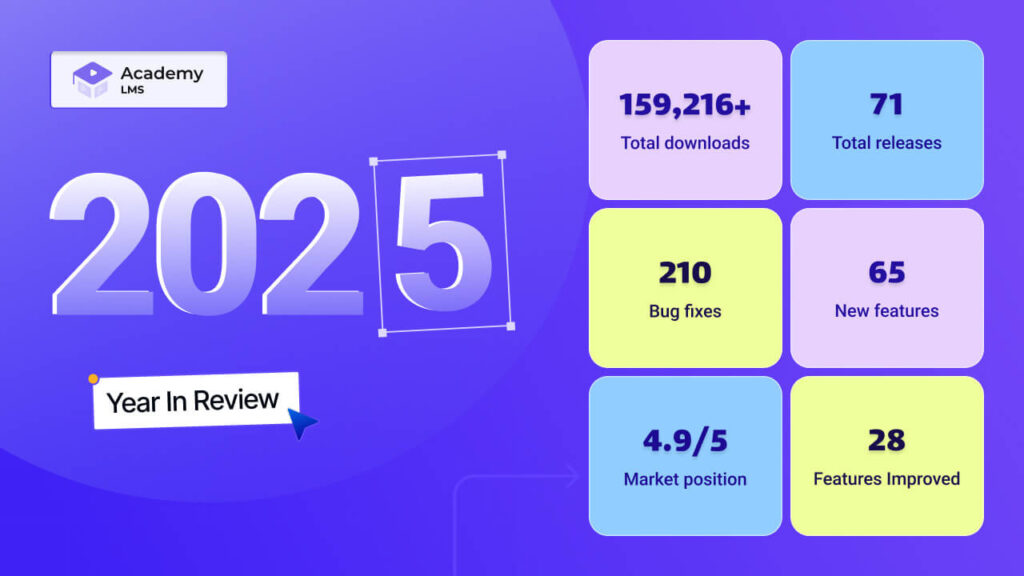
Throughout 2025, Academy LMS shipped at a steady and demanding pace.
- Total releases: 71
- Free: 38
- Pro: 33
- New features added: 65
- Bug fixes delivered: 210
- Existing features improved: 28
- Total downloads: 159,216+
- Overall rating: ⭐ 4.9 / 5
- Market position: Top-rated LMS plugin on WordPress
- Content & support delivered:
- Blog posts: 9
- Documentation guides: 34
- Tutorial videos: 17
- Short-form reels: 66
At the same time, we invested heavily in business-ready features.
We researched every major course business model—solo educators, membership academies, corporate training teams, group-based learning, and subscription platforms. Based on that research, Academy LMS expanded with native payments, memberships, subscriptions, course bundles, group access, device login restrictions, booking tools, affiliate support, and deep StoreEngine integration.
Quality stayed non-negotiable.
Each release focused on stability, performance, and clarity. Many improvements were behind the scenes, but they reduced friction in real use—fewer conflicts, smoother updates, and more predictable behavior across setups.
We also worked hard to support users beyond the plugin itself.
Throughout the year, we published continuous tutorials, documentation updates, blogs, videos, and short guides to help users adopt features with confidence. We strengthened integrations with MemberPress, WPML, BuddyBoss, ZenCommunity, calendar systems, analytics tools, AI services, and full-site editing themes—making sure Academy LMS fits naturally into modern WordPress environments.
By the end of 2025, the outcome became clear.
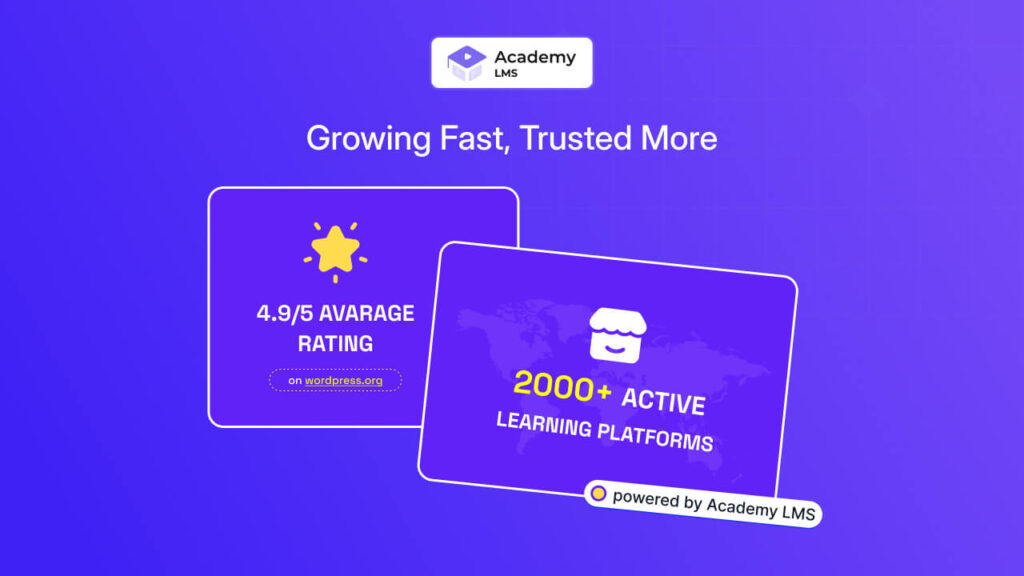
Academy LMS earned the Top Rated LMS position in WordPress.
It reached the top of WordPress.org search rankings.
And it became a platform trusted to power real learning businesses, not just test projects.
That leadership position was not claimed through marketing.
It was earned through consistent shipping, careful listening, and long-term commitment.
Read our in depth blog post to learn more: Academy LMS Year in Review 2025: From First Launch to a Trusted WordPress LMS Plugin For Your Online Courses
aBlocks: From Page Building to a Complete Website System
By the end of 2024, aBlocks was already doing really well.
Users were building serious websites with it. But inside the team, we knew this was only the beginning.
People often saw aBlocks as a powerful block plugin. But the way users were actually working told a bigger story. They were not just designing pages. They were building complete business websites—layouts, dashboards, forms, product views, interactions, and motion—all inside WordPress.
So in 2025, we changed how we think about aBlocks.
We stopped treating it as a website builder.
We started building it as a complete website system.
That shift shaped every decision we made throughout the year. Everything had to feel native to the WordPress editor. Everything had to reduce dependency on extra plugins. And everything had to work together as one system, not as scattered features.
The execution was intense.
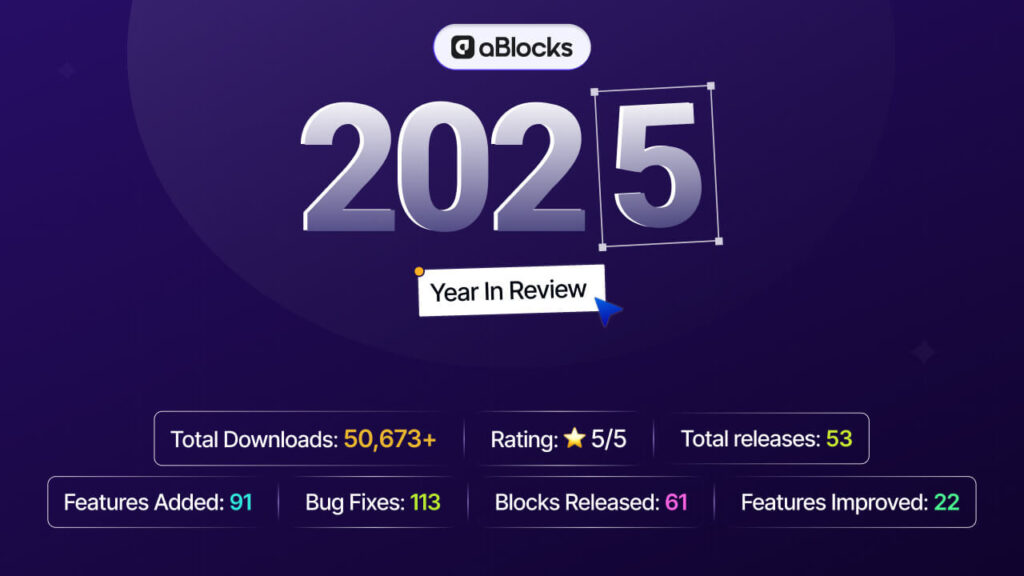
- Total releases: 53
- Free: 31
- Pro: 22
- New features added: 91
- New blocks introduced: 61
- Bug fixes delivered: 113
- Existing features improved: 22
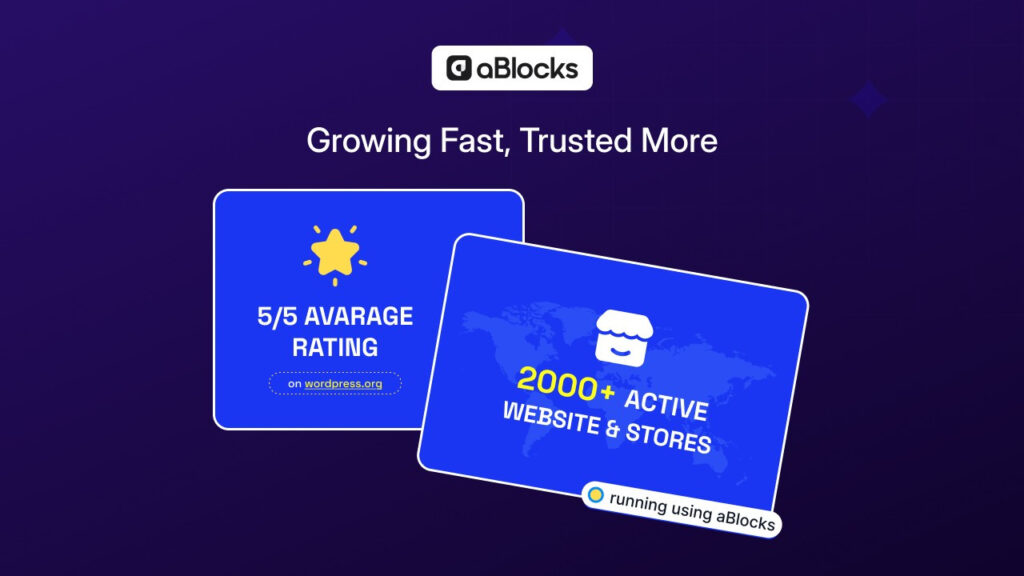
- Total downloads: 50,673+
- Overall rating: ⭐ 5 / 5
- Content & support delivered:
- Documentation guides: 56
- Tutorial videos: 66
- Short-form reels: 28
As the system grew, so did its capabilities.
aBlocks expanded far beyond page design. It powered theme building, frontend dashboards, form building, dynamic content, motion effects, and deep integrations with StoreEngine, Academy LMS, and QuizPress. Advanced layout control, global styling, reusable patterns, animation, and interaction became part of one predictable workflow.
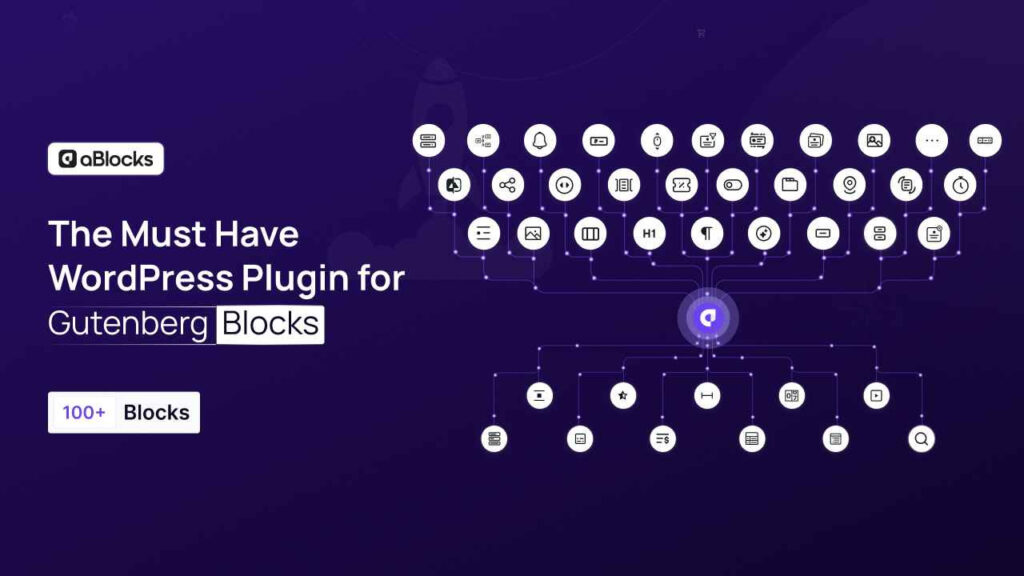
Even as aBlocks crossed 100+ advanced blocks, speed and stability remained non-negotiable. Every release was tested against real use cases. Backward compatibility mattered. Updates needed to feel safe on live websites.
A large part of 2025 was spent observing how users actually work.
Not demo layouts. Not showcase pages. Real production sites. We studied how agencies manage design systems, how creators reuse components, and how teams maintain consistency over time. Those insights shaped decisions around global color systems, typography control, container logic, dynamic blocks, and motion behavior.
By the end of 2025, aBlocks stood in a different position.
It was no longer seen as just another block plugin.
It became the most capable free block system in WordPress—fast, flexible, and built to power complete business websites from a single plugin.
That evolution made aBlocks more than a tool.
It became the structural layer of the Kodezen ecosystem.
Read our in depth blog post to learn more: aBlocks Year in Review 2025: A Year of Trust and Growth for a Modern WordPress Page Builder
StoreEngine: From a Focused Start to a Complete eCommerce Engine
StoreEngine did not begin as a general-purpose eCommerce solution.
At the start, it was built to solve a very specific problem for Academy LMS users—a reliable, native payment engine that could handle course sales without forcing them into expensive, plugin-heavy setups.
But very quickly, something became clear.
Store owners were spending far more than they should just to run basic eCommerce features. Even essential workflows—payments, subscriptions, checkout control—often required separate purchases. Growth tools came at an even higher cost. What should have been simple turned into a long list of add-ons and recurring fees.
That was not the future we wanted to build.
So in 2025, the vision for StoreEngine expanded.
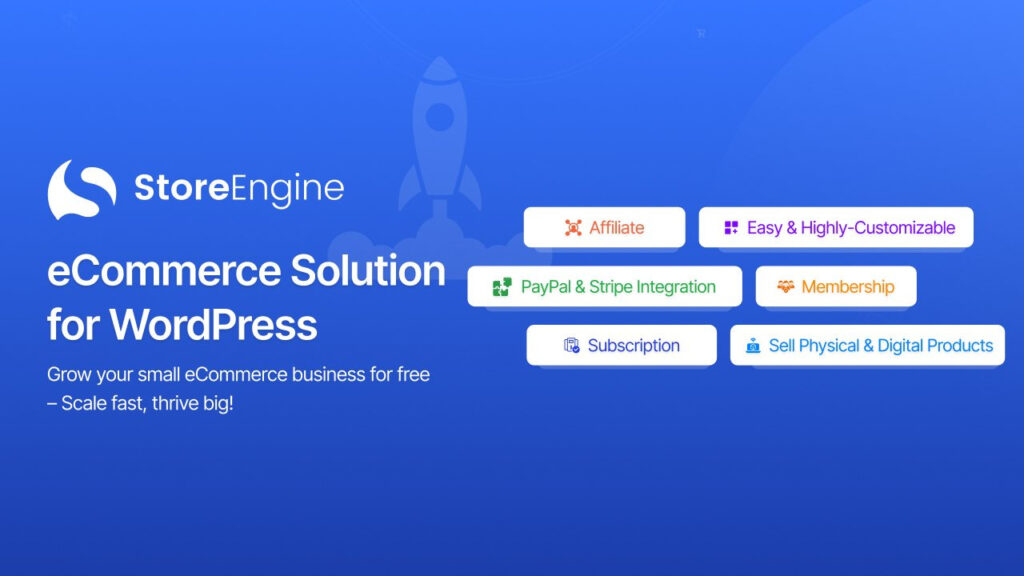
We decided to establish StoreEngine as a complete eCommerce solution—one that brings core selling features and growth tools under a single roof. The goal was simple: once a store owner chooses StoreEngine, they should not need to keep buying more plugins just to grow.
From the moment StoreEngine launched on April 10, 2025, every decision followed that direction.
Execution came fast and steady.
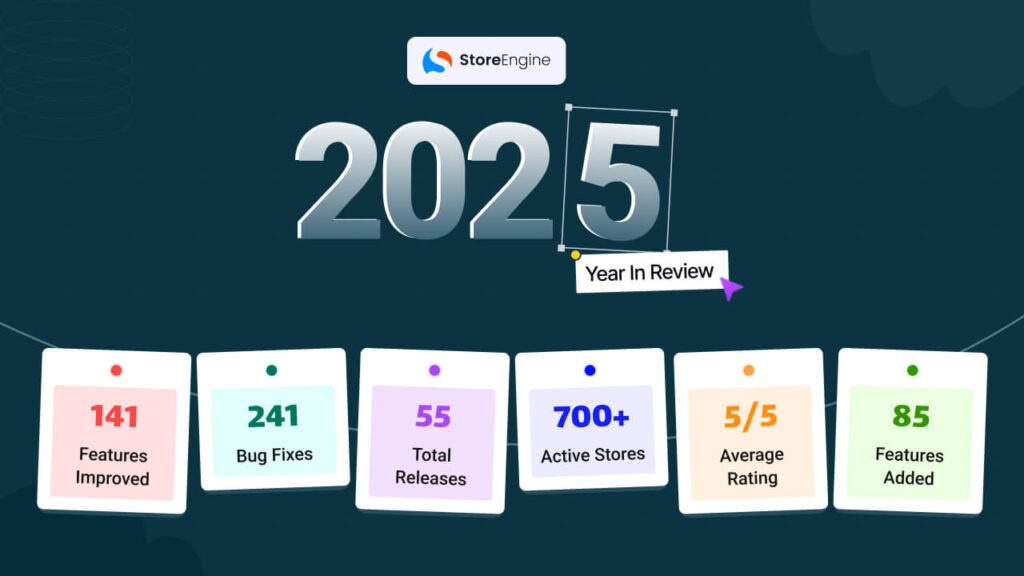
Across free and pro versions combined, the team shipped 55 total releases throughout 2025 (40 free, 15 pro). We added 85 new features, fixed 241 bugs, and improved 141 existing workflows. Alongside product execution, StoreEngine was supported with 53 documentation guides, 19 tutorial videos, 38 short-form reels, and 8 in-depth blog posts, ensuring store owners could adopt new features with clarity while running scalable, cost-efficient eCommerce operations.
As StoreEngine grew, it moved well beyond payments.
Subscriptions, memberships, trials, secure downloads, licensed software delivery, checkout control, cart recovery, coupons, taxes, invoices, customer dashboards, and analytics became part of one connected system. Growth tools were not treated as extras—they were built into the core experience.
StoreEngine also expanded confidently into real business use cases.
Digital products, physical goods, LMS bundles, subscriptions, and hybrid stores all worked within the same framework. Growth tools like product suggestion, order bump, affiliate, advanced analytic all included. Deep Academy LMS integrations made selling courses seamless, while shipping, digital file control, and flexible pricing supported more traditional eCommerce needs.
Stability remained non-negotiable.
Many improvements in 2025 focused on details that store owners feel over time—accurate order states, safe refunds, reliable downloads, cleaner admin flows, and predictable updates. These are the things that make growth feel safe.
Alongside the product, we invested in guidance.
StoreEngine was supported with clear documentation, practical blog posts, walkthrough videos, and short-form learning content—so users could move forward with confidence instead of guesswork.
By the end of 2025, StoreEngine had earned its place.
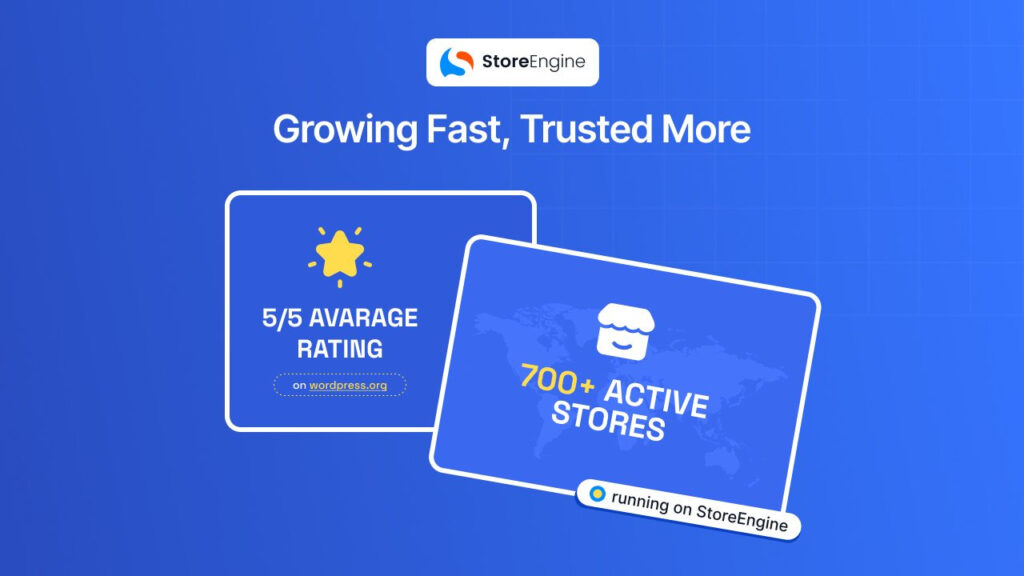
Hundreds of live stores relied on it.
It maintained a perfect rating built on real usage.
And it proved that WordPress eCommerce does not have to be expensive, fragmented, or hard to manage.
StoreEngine grew by removing costs, not adding them.
By simplifying workflows, not complicating them.
That is what made it the commerce engine of the Kodezen ecosystem.
Read our in depth blog post to learn more: StoreEngine in 2025: From First Launch to a Trusted WordPress eCommerce Engine
ZenCommunity: From Community Requests to Real-Time Engagement
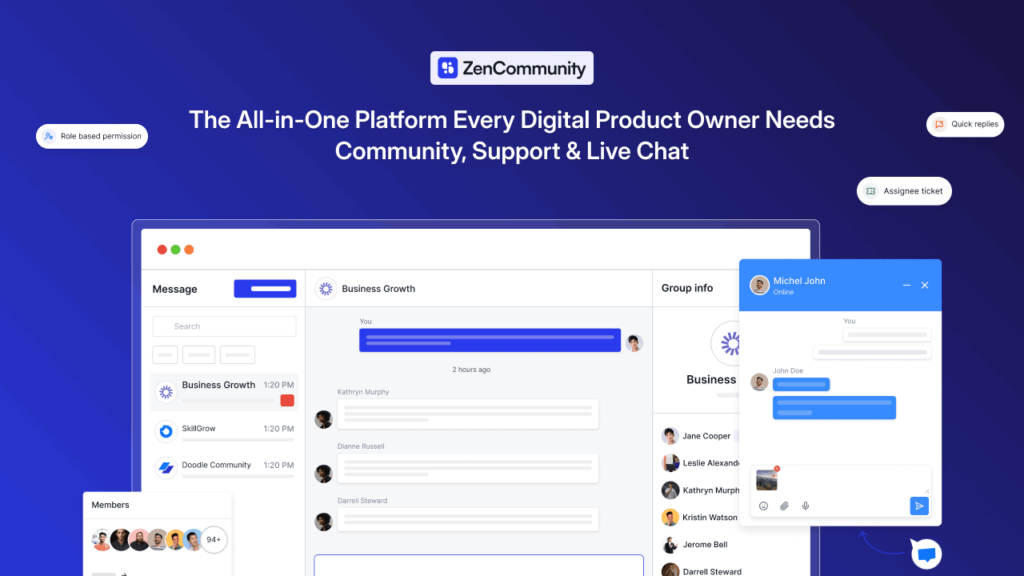
ZenCommunity started from a clear, repeated demand.
Our LMS users and store owners wanted a native community they fully control—not another external platform. They needed one place where students, customers, and teams could connect, talk, and get support without leaving their website.
At first, it sounded simple.
But it quickly became clear that posts and comments were not enough.
People wanted real-time interaction—live updates, instant conversations, reactions, mentions, and notifications that feel alive. So we made a hard decision: ZenCommunity would not be a traditional WordPress community. It would be real-time by design.
That choice changed everything.
Turning a standard WordPress community into a real-time system was the hardest part. Once that foundation was stable, two more needs surfaced immediately: support and live chat. Users were already paying separately for community tools, support systems, and chat software. We brought all three together—inside one plugin.
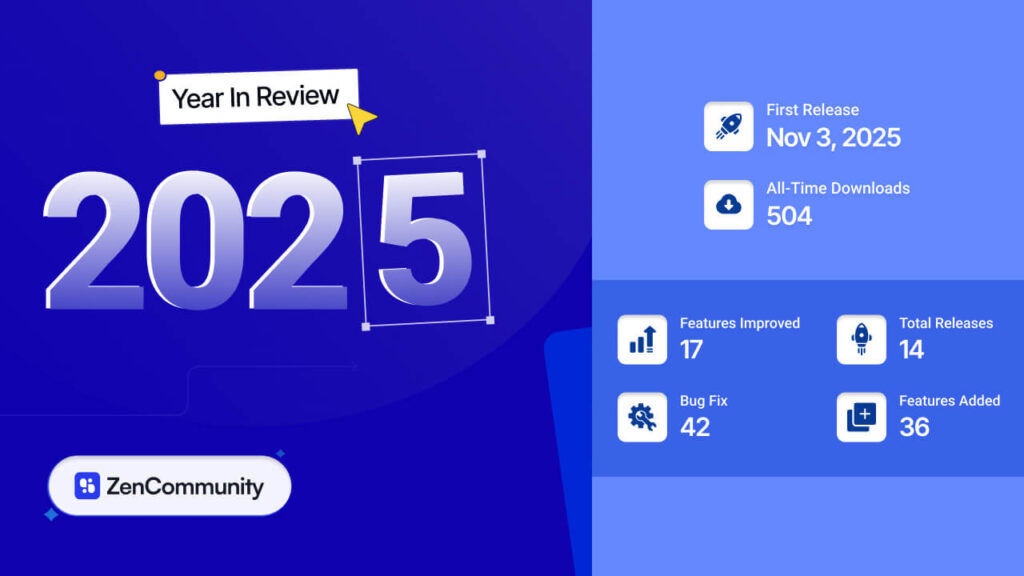
ZenCommunity’s first release shipped on November 3, 2025.
In a short time, the product moved fast:
- 14 total releases in the free version
- 36 new features added
- 42 bugs fixed
- 17 existing features improved
- Native integrations with Academy LMS, Tutor LMS, LearnPress, LearnDash, MasterStudy, and LifterLMS
Core capabilities like real-time posts, comments, replies, reactions, group messaging, live chat, support tickets, file sharing, dark/light mode, mentions, and notifications matured rapidly—driven by real usage, not assumptions.
Most importantly, ZenCommunity became real inside our own company.
We now run our entire customer community, support system, and website live chat on ZenCommunity itself. Customers post publicly, create tickets, or start live chats. Support engineers respond in real time, track conversations, share files, and manage everything from one branded interface.
That daily usage shaped the product faster than any roadmap.
By the end of 2025, ZenCommunity proved one thing clearly:
real-time engagement belongs inside your website—not scattered across tools.
That’s why ZenCommunity stands today as the engagement layer of the Kodezen ecosystem—built from real demand, hardened by real use, and designed to replace multiple systems with one.
ECM: From Custom Fields to Complete Content Management
aBlocks proved that advanced design in WordPress no longer needs code.
But inside the team, a deeper problem kept surfacing.
What if users could control content itself the same way—
without code, without backdated systems, without friction?
When we studied how WordPress handles structured data, the gap was clear.
Most tools focused only on adding custom fields. Very few helped users manage content as a system. As content grew, visibility dropped. Managing large datasets became slow and painful.
That question led to Easy Content Manager (ECM).
From day one, ECM was built to support both workflows:
- Classic WordPress users who prefer familiar patterns
- Teams who want a faster, modern, system-level experience
ECM went beyond field creation.
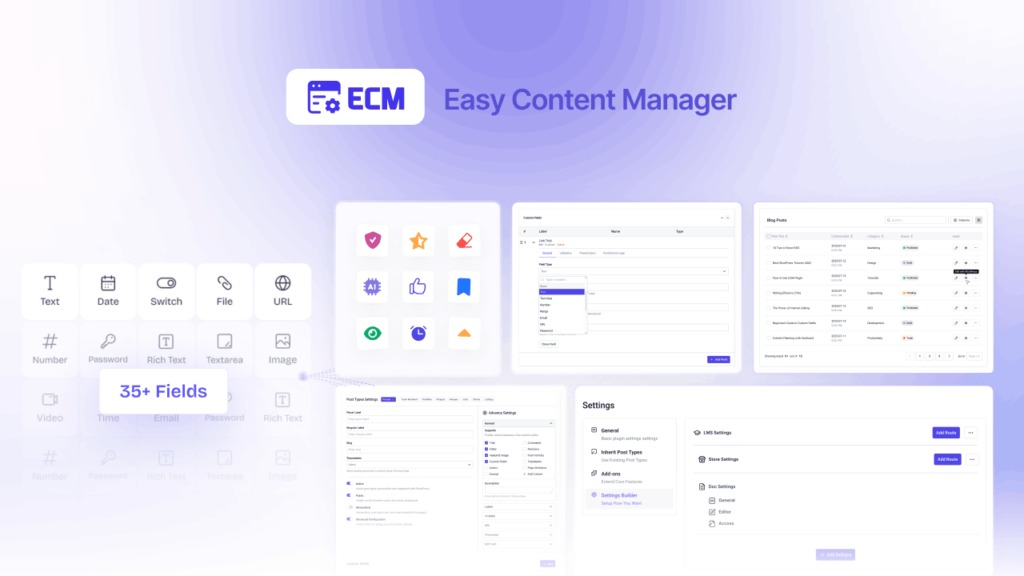
It allowed users to add custom fields anywhere—even where WordPress normally blocks editing—and introduced a unified interface to view, filter, duplicate, sort, and manage posts, post types, taxonomies, and structured data from one screen.
That shift mattered.
Large content sets became easier to control.
Repetitive admin work dropped.
Structured data finally became manageable instead of overwhelming.
Execution moved fast after launch.
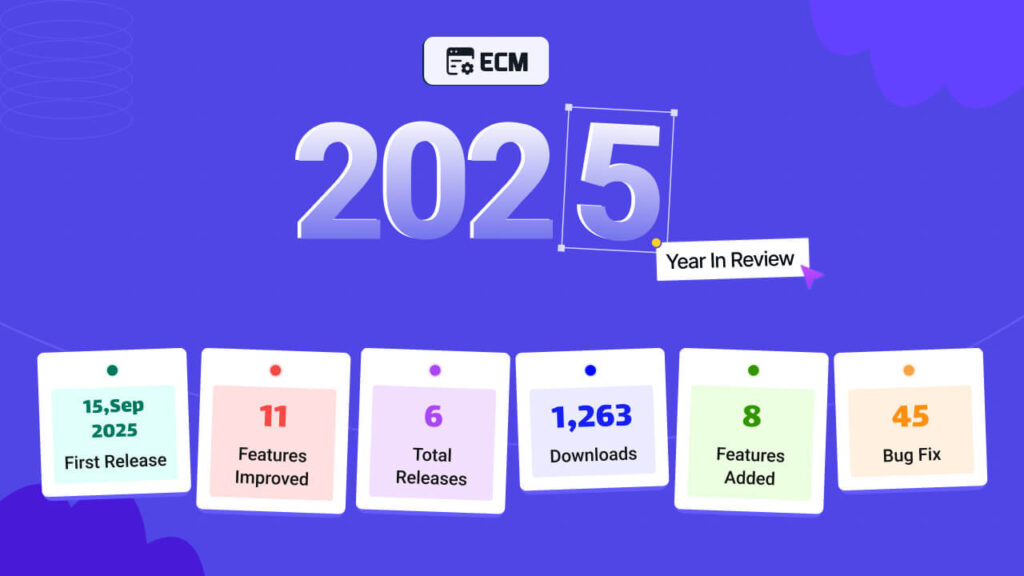
Since its first release on September 15, 2025, ECM delivered:
- 6 total releases (free)
- 8 new core features added
- 45 bugs fixed
- 11 existing features improved
- 35+ field types, custom post types, taxonomies, and a single-page React interface
- 1,263 total downloads in early adoption phase
As ECM evolved, add-ons expanded its role—introducing reviews, ratings, reactions, bookmarks, view tracking, sorting logic, and claim workflows. These were not surface features. Each addition focused on one thing: control how content behaves, not just how it looks.
Stability stayed non-negotiable.
Field rendering became faster.
Taxonomy handling became more reliable.
Duplication, filtering, and sorting workflows improved with every iteration—while the system stayed lightweight.
What makes ECM different is not ambition—it’s alignment.
It works with WordPress defaults, not against them.
It supports modern workflows without forcing users to abandon familiar habits.
And it gives creators, agencies, and site owners the freedom to shape content around real business needs.
ECM was never built to replace tools like ACF.
It was built to go further.
By combining custom fields, post types, taxonomies, settings, and content management into one system, ECM became the content and data layer of the Kodezen ecosystem—quiet, practical, and built for real projects.
Emerging Products: GemBoards and QuizPress
Not every product reaches maturity in the same year.
Some products begin by solving very focused problems—and grow from there.
In 2025, two such products took shape inside Kodezen.
GemBoards: Visual task and workflow management inside WordPress
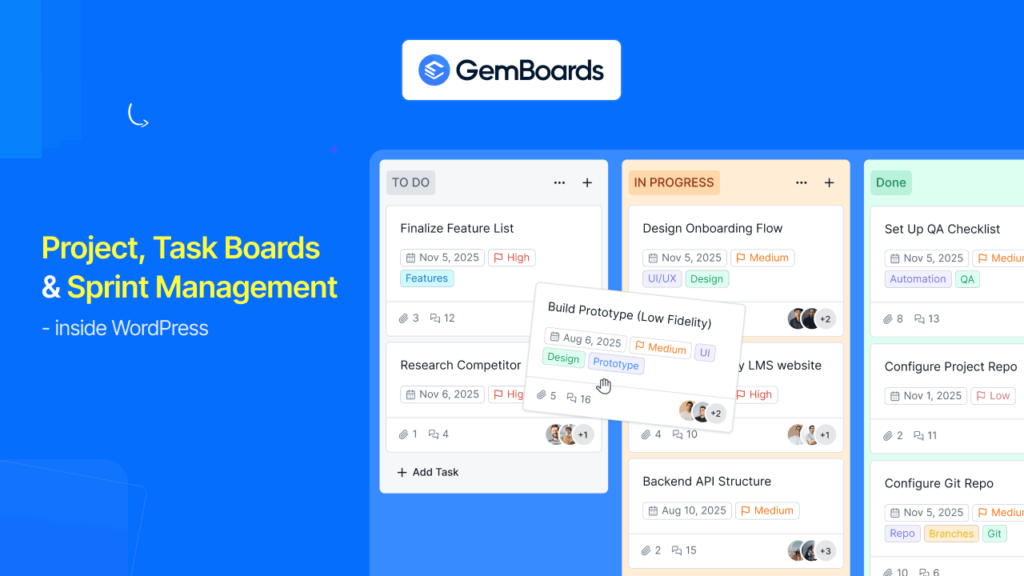
GemBoards started with a simple observation
Teams building with WordPress were still forced to leave their site just to manage tasks, goals, and internal workflows. That context switch created friction. Work became scattered. Ownership blurred.
GemBoards was built to keep work where the work already happens.
Instead of copying heavy project management tools, GemBoards focused on clarity:
- Project creation
- Kanban and sprint workflows
- Task folders and role-based permissions
- Notifications and user invitations
- Lightweight collaboration designed for WordPress teams
Since its beta release, GemBoards delivered:
- First Release: 24 December 2025
- 10 total releases
- 15 core workflow features added
- 29 bug fixes
- 14 documentation resources
- 504 total downloads in early access
Throughout beta, one insight became clear:
Effective project management does not need complexity.
The core is now stable.
The workflow direction is validated.
GemBoards is shaping into a natural productivity layer for teams already using Kodezen tools to build, sell, and manage their businesses inside WordPress.
QuizPress: Advanced quiz, assessment, and certification for learning and engagement
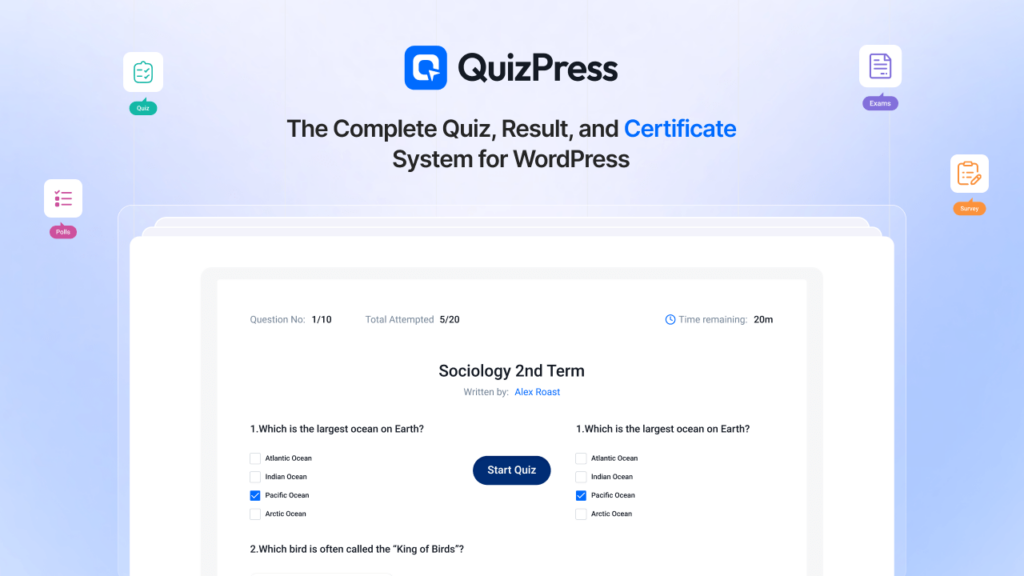
QuizPress was born from another recurring need.
Educators, trainers, and site owners wanted quizzes and assessments—but without the weight of a full LMS or scattered add-ons. They needed something focused. Flexible. Reliable.
QuizPress was designed to do exactly that.
From quizzes and assessments to certifications and learning engagement, QuizPress focused on structure and clarity. Creating questions, managing attempts, tracking results, and issuing certificates—all without unnecessary setup.
During its beta stage, QuizPress showed strong potential as a standalone assessment tool, while also fitting naturally alongside learning platforms like Academy LMS.
It is still early. But the foundation is solid.
QuizPress is being shaped carefully, with real use cases guiding every decision—so when it fully arrives, it will feel purposeful, not rushed.
Looking Ahead to 2026: Building for Real Growth
In 2026, our focus is clear.
We want to take our established products to true leadership positions—just like Academy LMS. But leadership, for us, does not mean pushing people to use our plugins. It means solving real problems, simplifying daily work, and helping businesses grow with confidence.
Every business is different.
Different models. Different workflows. Different challenges.
Our goal is to make sure Kodezen products fit naturally into all kinds of businesses—globally. We want each product to feel like the best possible choice, no matter how a business operates or scales.
At the same time, we are preparing our newer plugins for broader adoption. GemBoards, QuizPress, and other upcoming tools are being shaped with the same mindset: practical use cases first, long-term value second, and noise last.
Today, our ecosystem already helps people build many types of businesses.
In 2026, we are going further.
Our focus is not only on helping people start businesses, but on helping them scale. That is why we are investing deeply in marketing-focused plugins. Our goal is simple: when someone uses the Kodezen ecosystem, they should not need extra third-party tools to grow.
Our development teams have already started work in this direction.
New marketing tools are taking shape.
We are excited to bring them to you soon.